Our process
Our Anchorage Water Damage Response
A dry-out in Anchorage is won in the first day and the cold that follows. Our crew runs this sequence the moment we reach your street.
Kill the Source and Trace the Water
We close the failed valve or tarp the roof, then trace the water's path. In Anchorage stud bays and crawl spaces, we probe for what stays hidden.
Haul Out Water and Ruined Material
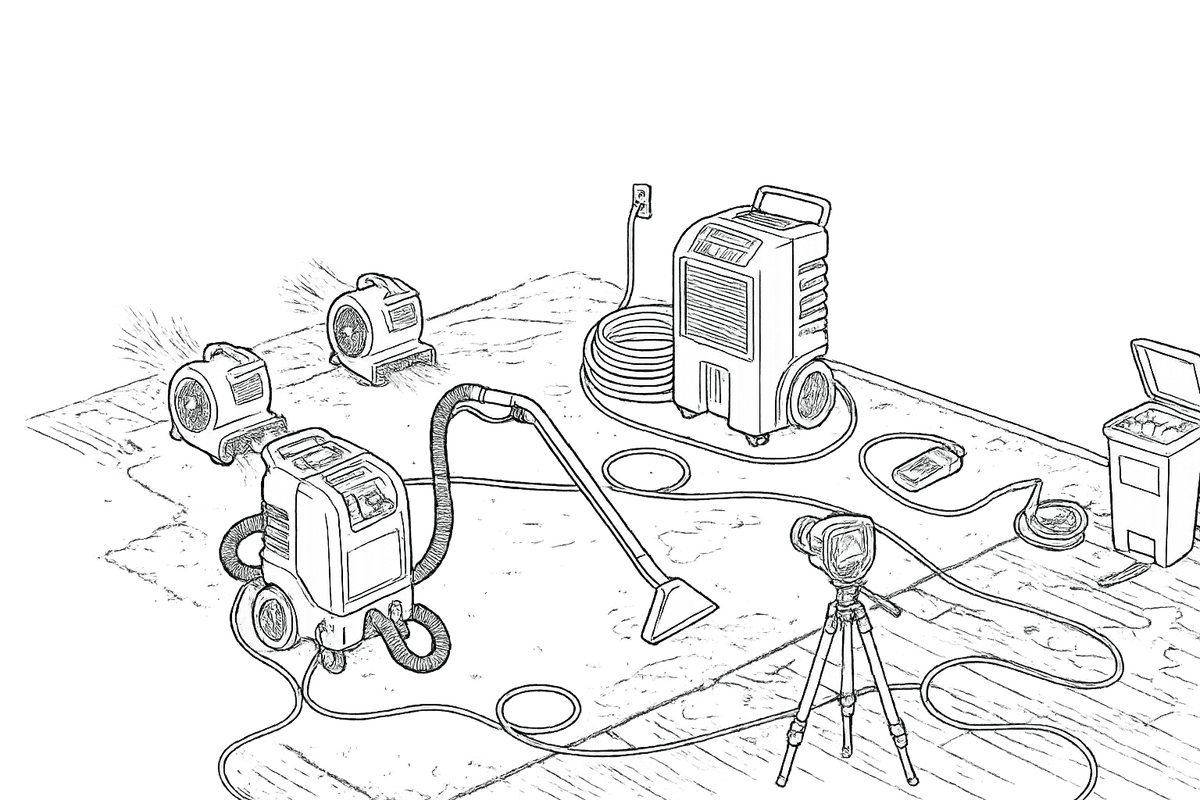
We vacuum standing water and haul soaked carpet, pad, and insulation. Clearing that wet mass first lets the Anchorage framing begin to release moisture.
Run a Drying Rig for the Cold
We stage air movers and low-grain dehumidifiers for Anchorage's cold, dry air. Daily meter readings tell us when each cavity has truly dried.
Rebuild the Repaired Rooms
Once the readings pass, our own carpenters restore drywall, floor, and trim. Your Anchorage home finishes as one job, start to end.
Local realities
How Water Gets Into Anchorage Homes
Anchorage water damage usually arrives fast and from the cold.
A pipe in an unheated wall or crawl space freezes, then splits. When it thaws, water pours out until someone shuts the main. In a deep Anchorage winter, that can run all night. By morning, water can reach two floors down through the framing.
Roofs bring the second kind of leak. Heavy snow builds ice dams along the eaves, and trapped meltwater backs up under the shingles. From there it drips into ceilings and walls across the home. Neighborhoods with older roofs, like Spenard and Mountain View, see this often.
Spring adds a third source the locals call breakup. As the snowpack melts, water and ice jams push into low yards and crawl spaces. Homes near Ship Creek, Chester Creek, and Campbell Creek feel it most. Ember & Tide reaches Anchorage from Wasilla by the Glenn Highway, about forty minutes out. We move fast because wet framing and insulation only get worse with time.
Why it matters
Anchorage Water Damage by the Numbers
Drying a home in Anchorage fights the same cold that caused the damage.
Cold air holds little moisture, so evaporation from wet framing runs slow. That makes our dehumidifier choice matter more here than down south. The city still averages near 77 inches of snow, loading roofs for ice-dam leaks. With January lows near 11 degrees, a pipe can burst and flood in minutes.
The season also decides where the water comes from. From March to May, the NWS Alaska River Forecast Center watches ice-jam breakup floods. The Alaska Housing Finance Corporation warns ice-dam meltwater tracks under shingles. We build each drying plan around that cold-air math and the calendar.
Warning signs
Signs of Water Damage in an Anchorage Home
Some water sits hidden for days before anyone in the house notices. Our Anchorage crews get called on these clues most often.
The Water Meter Creeps With Everything Off
Shut every fixture and appliance, then watch the municipal meter. If the dial still creeps, a hidden Anchorage line is leaking somewhere.
A Sewage Smell or Backup in a Drain
A gurgling drain or foul smell can signal a category-three backup. That Anchorage water needs containment and disposal, not just a mop.
Cold, Soft Flooring Over the Subfloor
A floor that feels cold, soft, or spongy usually covers wet subfloor. Anchorage slab and crawl-space homes both give this away underfoot.
A Ceiling Panel That Bows or Rings
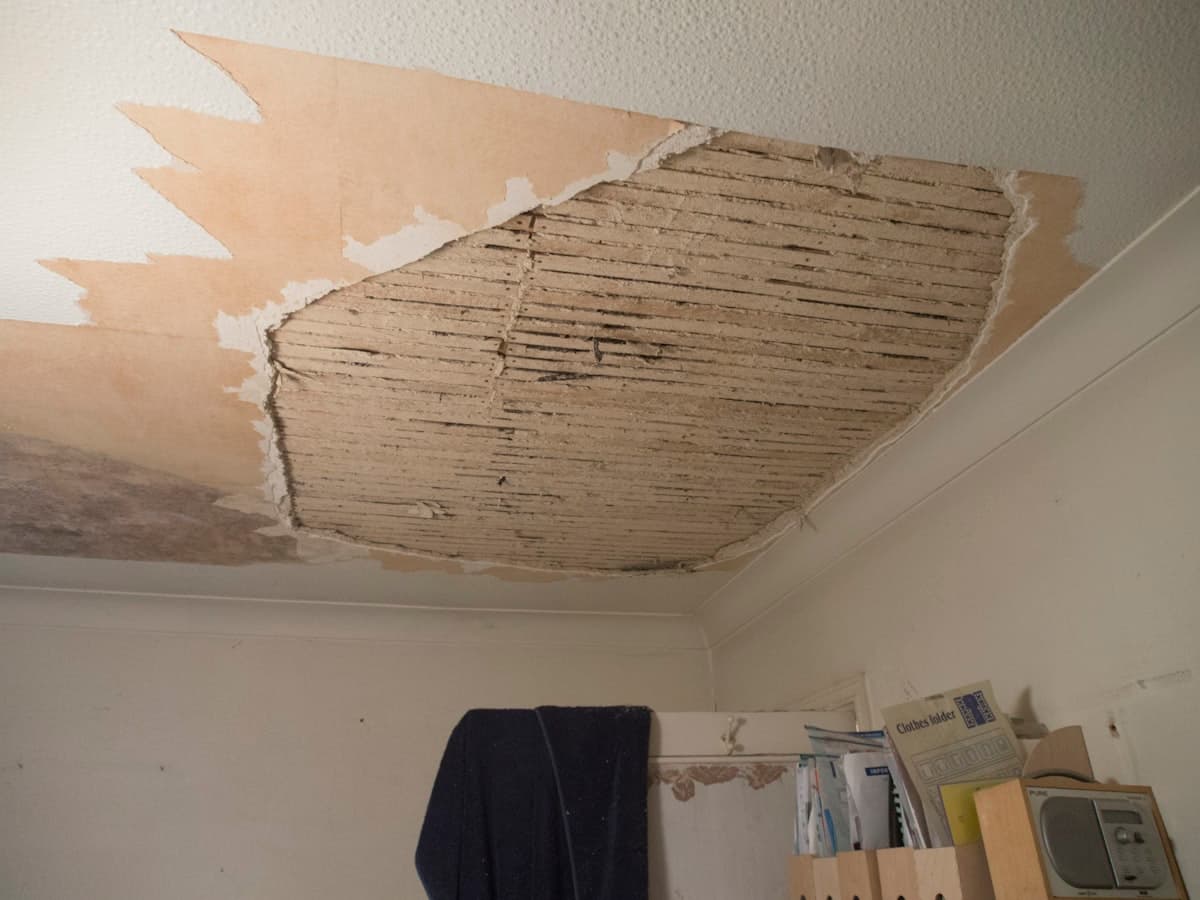
A sagging or ring-stained ceiling means water pooled above it first. Under an Anchorage roof, that trail usually starts at an ice dam.
Why us
Why Anchorage Calls Ember & Tide for Water Damage
A dry-out is measured, not guessed, and that is where we focus. These strengths make Ember & Tide a strong Anchorage water partner.
We Dry to a Documented Number
We log moisture readings until framing and subfloor hit a safe target. A guess leaves Anchorage homes damp enough to seed mold later.
Dehumidifiers Matched to Cold Air
Cold indoor air holds moisture differently during an Anchorage dry-out. We pick low-grain refrigerant or desiccant units to fit it.
One Crew Pulls Water and Rebuilds
The same team that extracts the water restores the room after. That spares your Anchorage project the handoff most firms force.
We Stage for Freeze and Breakup
We plan for burst-pipe winters and spring breakup floods in advance. That readiness shortens our Anchorage response when they hit.
Coverage
Anchorage Neighborhoods We Serve for Water Damage
Burst pipes and roof leaks turn up all over the Anchorage Bowl. We reach homes across the municipality, in every season.
Older Spenard and Fairview homes see frozen-pipe and ice-dam leaks each winter. In Turnagain and Bootlegger Cove, wind-driven snow loads roofs and eaves. Homes near Chester Creek and Campbell Creek face breakup groundwater. On the Hillside and in Rabbit Creek, long driveways slow a homeowner's own response. We also serve Sand Lake, Government Hill, Mountain View, and Abbott Loop, plus Eagle River, Chugiak, and Girdwood.
Common questions
Anchorage Water Damage FAQ
A dry-out raises questions about time, mold, and coverage. Here are direct answers for Anchorage homeowners.
How long does a home dry-out take in Anchorage?
Most take three to five days, though cold air can extend that. We meter daily and stop only when the readings hit dry.
Do I have to tear out wet drywall and flooring?
Not always, since some materials dry in place with the right setup. We remove only what cannot be dried to a safe standard.
Is water damage usually covered by insurance?
Sudden pipe bursts are often covered, while slow leaks may not be. We document the loss so your Anchorage adjuster has what they need.
How do you stop mold after the water?
Speed and metered drying are the real defense against mold. We dry Anchorage framing fully before it has a chance to grow.
Do you dry crawl spaces and basements too?
Yes, we treat crawl spaces, basements, and slab floors alike. Those low Anchorage spaces hold water and need direct drying.
Water Damage in Anchorage? Call Ember & Tide Now
The first hours set how much of your Anchorage home survives. We roll from Wasilla to extract the water and dry the framing. We stay on it until the moisture meter reads dry and the repairs are finished.
See also: Anchorage mold remediation, Anchorage reconstruction, and our Anchorage service-area hub.