
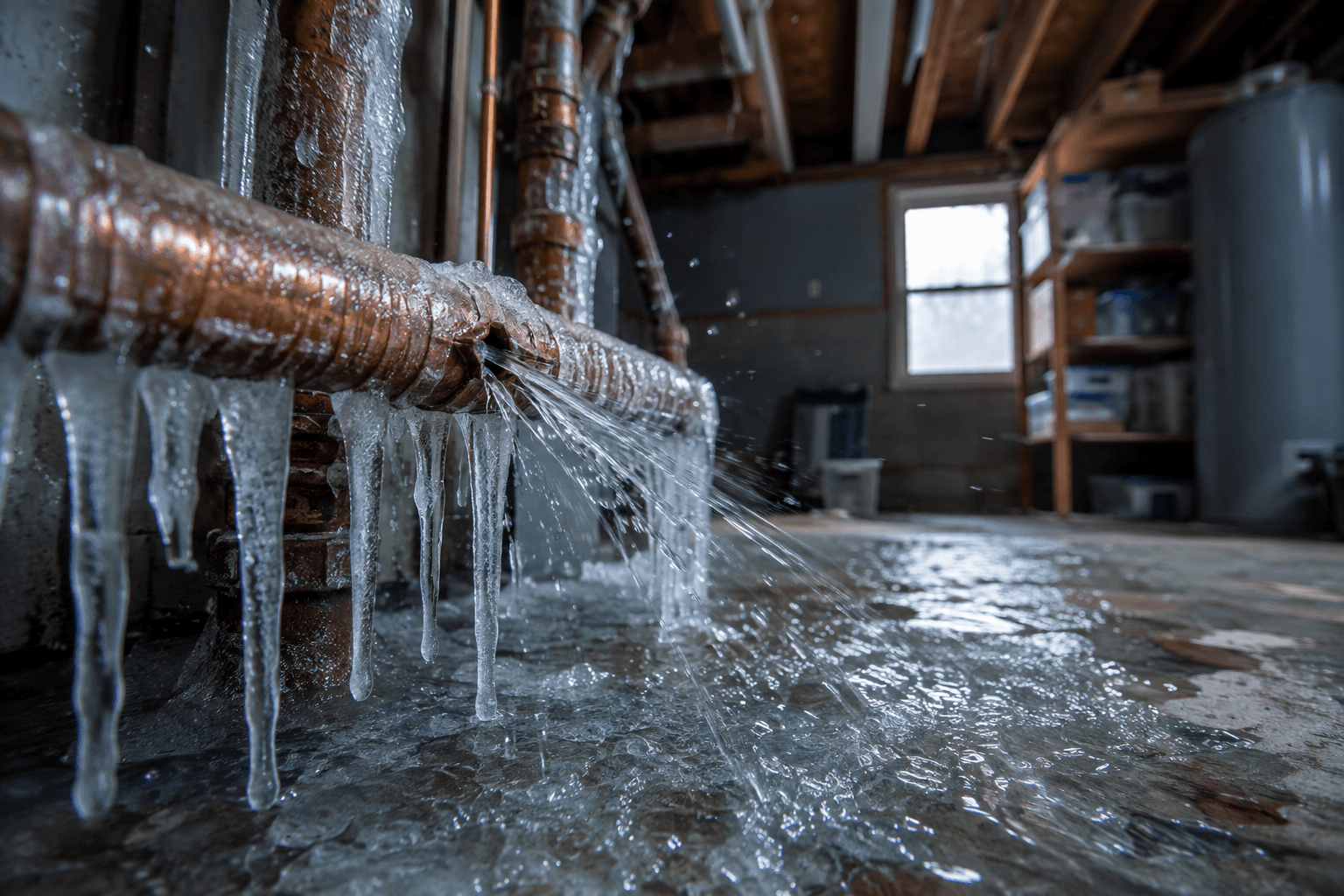
It is January in the Mat-Su Valley, and you walk into a room where water is spraying from the wall. A pipe has frozen, split, and burst. In an Alaska winter, this is one of the most common ways a home floods. What you do in the next hour decides how much of your home you keep.
Key Takeaways
Shut off your home's main water supply first, before anything else.
Water damage can become a mold problem within 24 to 48 hours, so act fast.
Document the damage, then call a local restoration crew and your insurer.
Why the First Hour Matters Most
A burst pipe can release many gallons of water in just a few minutes. In a Wasilla home, that water spreads into subfloor, walls, and crawl spaces quickly. The longer it sits, the deeper the damage goes. The EPA notes that mold can begin growing on wet materials within 24 to 48 hours. Acting in the first hour is what keeps a burst pipe from becoming a full gut job.
Cold makes it worse in the valley. Water that is not removed can refreeze and spread further into the structure. That is why the first steps you take matter more than anything a crew does later.
Step 1: Shut Off the Water
Your first move is to stop the water at its source. Find your home's main shutoff valve and close it. In many Wasilla homes, that valve sits near the well pump or the pressure tank. If you cannot find it, shut off the valve at the water meter instead.
Knowing where that valve is before winter saves precious minutes. The American Red Cross recommends locating your main shutoff before the cold arrives. Show everyone in the home where it is and how to close it.
Step 2: Cut the Power Near the Water
Water and electricity together are dangerous. If water is near outlets, wiring, or your electrical panel, shut off the power to that area. Only do this if you can reach the breaker safely and without standing in water.
If you are unsure whether it is safe, stay clear and wait for help. No floor is worth an electrical shock. Safety comes before saving anything in the room.
Step 3: Document Everything and Call for Help
Before you start cleaning, photograph the damage. Take clear pictures of the burst pipe, the standing water, and every affected room. That documentation supports your insurance claim from the very start.
Then make two calls. Call a local water damage restoration crew, and call your insurance company. A fast call gets a crew extracting water before it spreads any further. The sooner professionals arrive, the more of your home they can save.
Step 4: Start Removing Water
While you wait for help, begin removing what water you can. Mop, towel, or wet-vac the standing water off the floor. Move furniture and belongings out of the wet area to higher ground.
Open interior doors to help air move through the space. Lift wet rugs and pull back soaked carpet if you can do it safely. The goal is to slow the damage, not to finish the whole job yourself.
What Not to Do
A few common mistakes make a burst pipe worse. Do not use an open flame to thaw a frozen pipe, since that is a fire risk. Do not ignore water that seems minor, because it wicks into hidden spaces fast.
Do not wait to see if the pipe stops on its own. And do not assume a quick mop-up is enough once the surface looks dry. Water hides in framing and subfloor, where only metered drying reaches it.
Preventing the Next Freeze
Once the emergency is handled, prevention keeps it from happening again. Insulate pipes in crawl spaces, garages, and along exterior walls. Let a faucet drip during a hard Mat-Su cold snap to keep water moving through the line.
Keep your home heated even when you travel in the winter. In the valley, a frozen well line or pump house is a common failure point, so protect those too. A little prevention each fall saves a flooded home each winter.
Frequently Asked Questions
How long can pipes be frozen before bursting?
There is no exact clock, since it depends on the cold and the pipe. A pipe can burst within hours of freezing in a hard Alaska cold snap. The safest move is to treat any frozen pipe as urgent.
What should I do the moment a frozen pipe bursts?
Shut off your main water supply first to stop the flow. Then cut the power if water is near it, and document the damage. Call a restoration crew and your insurer right away.
Will frozen pipes thaw on their own?
They can, but waiting is risky, because a frozen pipe may already be split. When the ice thaws, water pours out through the crack. It is safer to shut off the water and thaw the pipe carefully.
How urgent is a frozen pipe?
Very urgent, since a frozen pipe is often a burst waiting to happen. The pressure that builds behind the ice is what splits the pipe. Treat a frozen pipe as an emergency, not a wait-and-see.
When the Water Won't Stop, Call Your Mat-Su Crew
A burst pipe is frightening, but a fast response protects your Wasilla home. Ember & Tide Restoration handles burst pipe water damage across Wasilla and the Mat-Su Valley. Our water mitigation crew extracts the water, dries the structure, and rebuilds what the loss damaged. When a pipe bursts, reach us through our contact page. We move fast so you keep more of your home.
More reading
More From the Crew

Insurance & Claims5 min
Fire to Finish: Why In-House Reconstruction Speeds Your Claim
Most fire claims stall in the handoff between the cleanup crew and the contractor. Here is why keeping mitigation and reconstruction under one roof moves the claim faster.
Cost Guide5 min
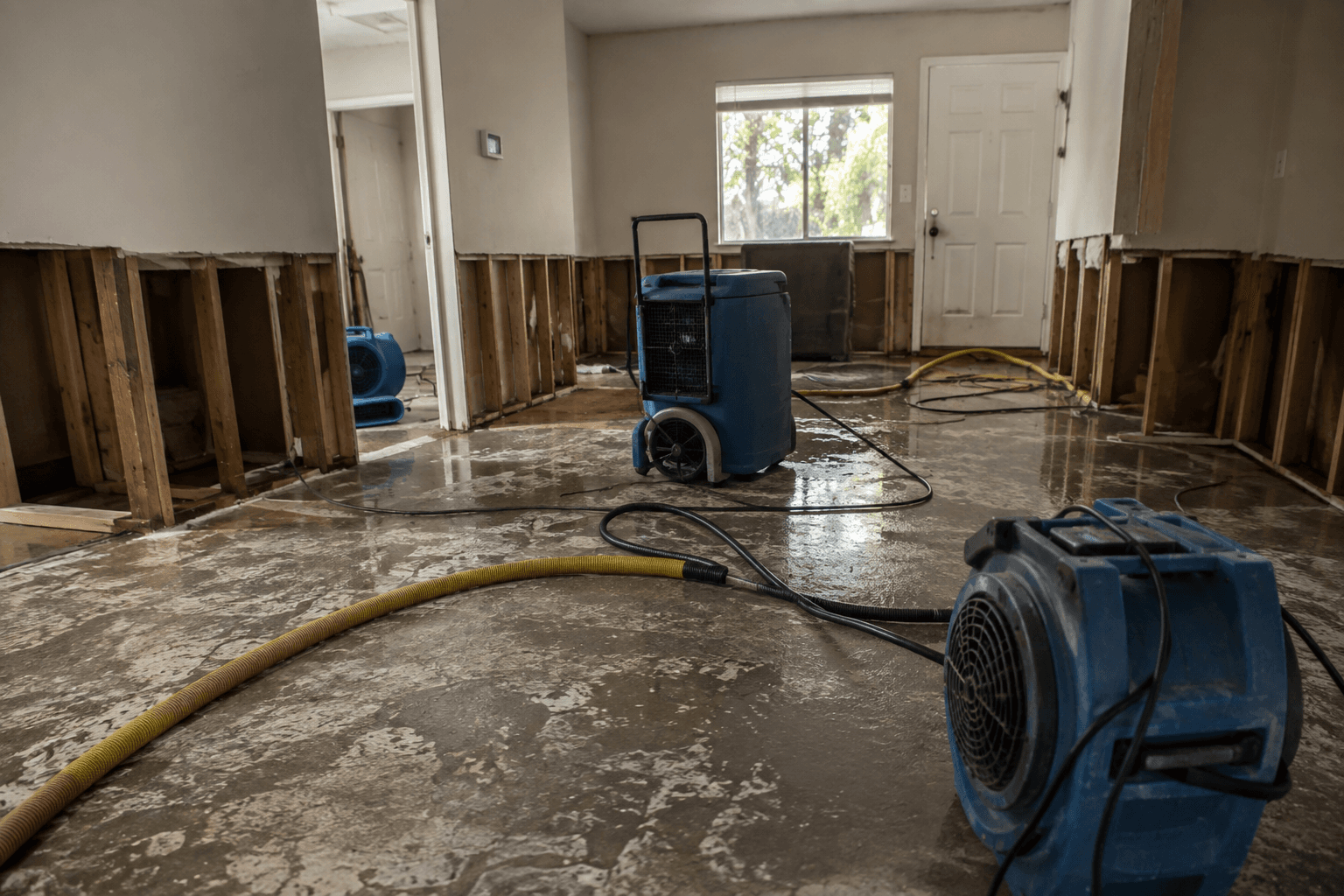
How Much Does Water Damage Restoration Cost in the Mat-Su Valley?
There is no single price, but there are four factors that set it. What drives the cost of a water loss in the valley, what insurance covers, and how acting fast keeps the number down.
Winter Prevention5 min
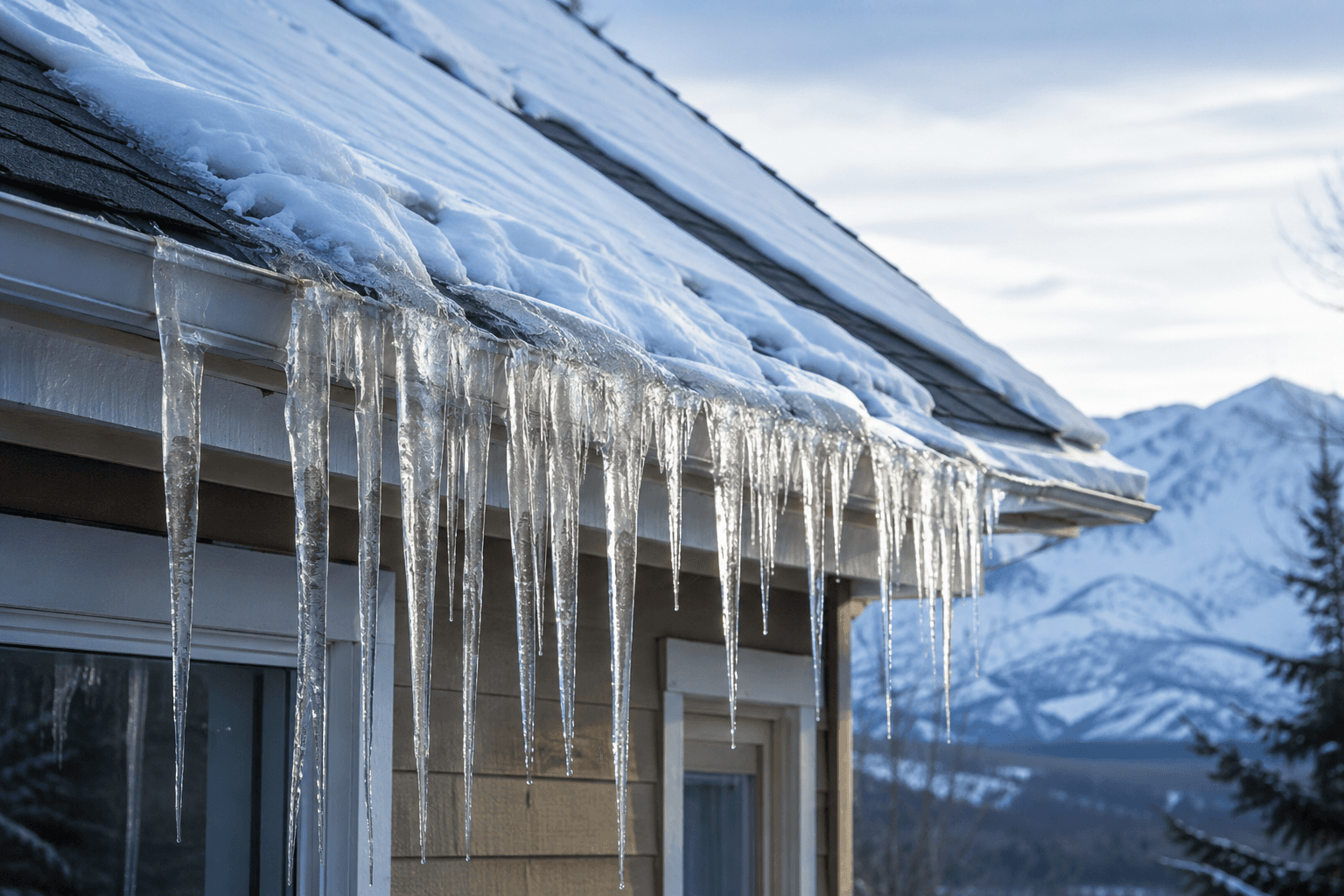
Preventing Ice Dams & Roof Leaks Through an Alaska Winter
Thick icicles at the eaves are the warning. How ice dams form on a Mat-Su roof, the four steps that prevent them, and what to do the moment water gets in.