
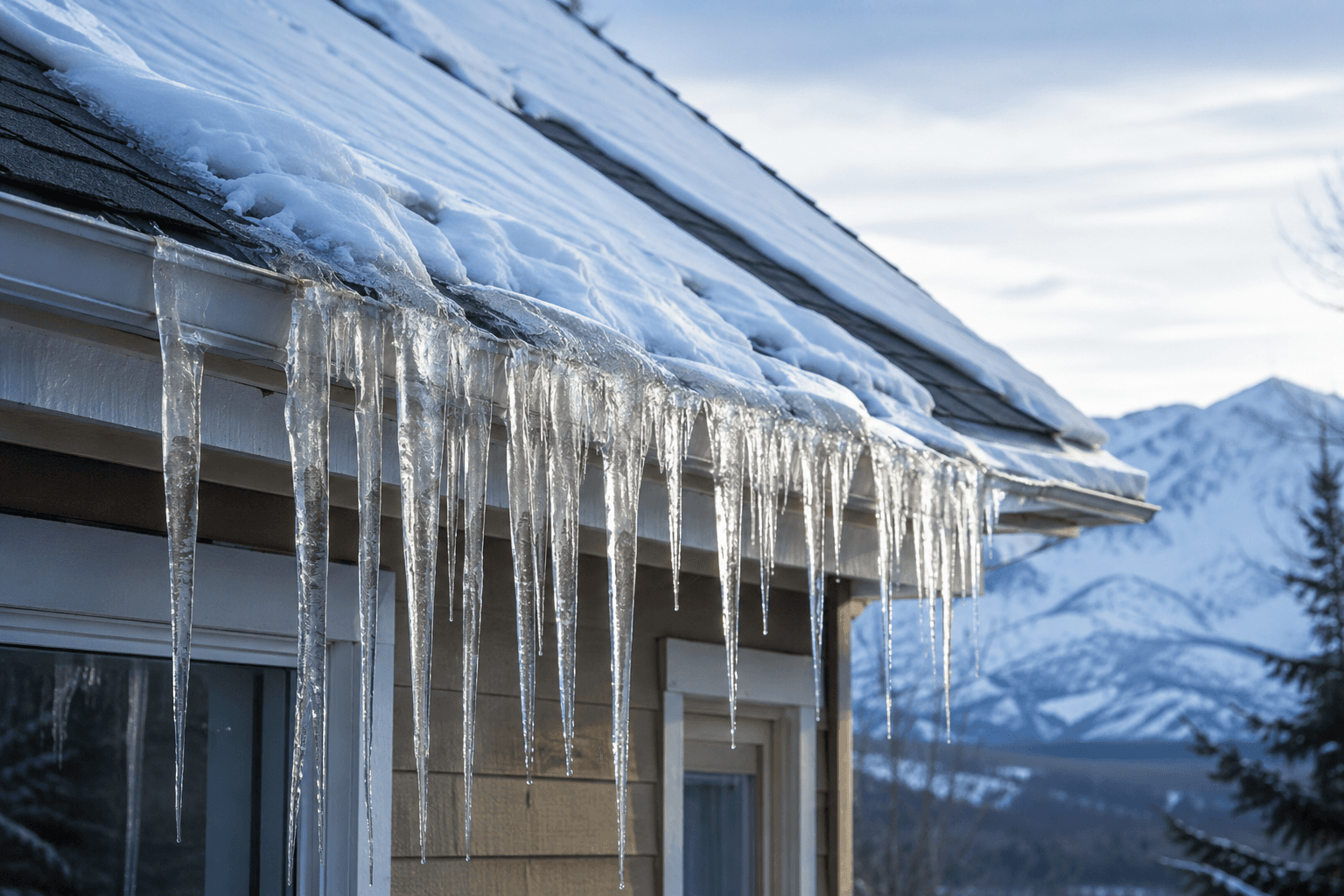
You notice a row of thick icicles along the eaves, and then a brown stain spreads on the ceiling. That is an ice dam at work, and it is a common winter problem in the Mat-Su Valley. Ice dams push water up under your shingles and into the home. With a little prevention, you can keep one from turning your Wasilla winter into a water loss.
Key Takeaways
Ice dams form when a warm roof melts snow that refreezes at the cold eaves.
A cold, well-sealed attic is the best defense against ice dams.
If water gets in, dry it fast, since mold can start within 24 to 48 hours.
How an Ice Dam Forms
An ice dam is a ridge of ice that builds at the edge of a roof. The National Weather Service explains that heat escaping into the attic melts snow higher on the roof. That meltwater runs down and refreezes when it reaches the colder eaves.
Over time, the ice builds into a dam. Water pools behind it and has nowhere to go. It works its way up under the shingles and leaks into the ceiling and walls below.
How to Prevent Ice Dams
The goal of prevention is a roof that stays evenly cold. A few steps keep the heat that causes ice dams out of your attic.
Keep Your Attic Cold
A cold attic means the snow on your roof melts evenly, or not at all. That is what stops the melt-and-refreeze cycle at the eaves. The whole strategy comes down to keeping attic heat down.
Add Insulation and Seal Air Leaks
Warm air leaks into the attic through gaps around lights, vents, and the attic hatch. Sealing those leaks and adding insulation keeps that heat in your living space. It also lowers your heating bill through a long valley winter.
Improve Attic Ventilation
Good ventilation lets cold outdoor air keep the attic and roof deck cold. Soffit and ridge vents move that air from the eaves to the peak. A well-vented attic resists the uneven melting that builds ice dams.
Clear Snow From the Roof Edge
After a heavy Mat-Su snowfall, rake the snow off the lower few feet of roof. Less snow at the eaves means less meltwater to refreeze. A roof rake from the ground is the safest way to do it. Never climb an icy Wasilla roof to chip at a dam yourself.
Warning Signs of an Ice Dam
Catching an ice dam early can save your ceiling. Watch for a thick ridge of ice along the roof edge. Large icicles hanging from the gutters are another clear sign.
Inside, look for water stains on ceilings or the tops of walls. A damp or discolored patch near an exterior wall often traces back to an ice dam. The sooner you spot it, the less water gets in.
What to Do If Water Gets In
Even good prevention can be beaten by a hard Alaska winter. If water leaks in, act fast to limit the damage. Move belongings away from the drip and catch the water in a bucket.
Then dry the area quickly, because time is not on your side. The EPA notes mold can begin within 24 to 48 hours on wet materials. A fast response keeps a roof leak from becoming a mold problem. Water also travels far from the leak, so check nearby rooms.
Frequently Asked Questions
How do you stop ice dams on a roof in winter?
Keep the attic cold with insulation, air sealing, and good ventilation. Rake snow off the lower roof after a heavy fall. Those steps stop the melting that forms an ice dam.
Will homeowners insurance cover ice dam damage?
Often yes, since ice dam leaks are usually a sudden loss. Coverage depends on your policy and the cause. Document the damage and check with your carrier.
Do ice dams cause roof leaks?
Yes, that is the main danger of an ice dam. Water backs up behind the ice and under the shingles. From there it leaks into the ceiling and walls.
Is there a permanent solution for ice dams?
The lasting fix is a cold, well-sealed, well-vented attic. That addresses the heat loss that causes ice dams. Snow raking helps, but the attic is the real solution.
Caught a Winter Roof Leak? Call Ember & Tide
Prevention goes a long way, but a hard winter can still find a way in. When an ice dam leaks into your Wasilla home, a fast response protects the ceiling and walls. Ember & Tide Restoration handles roof-leak water damage across the Mat-Su Valley. Our water mitigation crew dries the structure before mold sets in. If water gets past your prevention, reach us through our contact page.
More reading
More From the Crew
Water Damage5 min
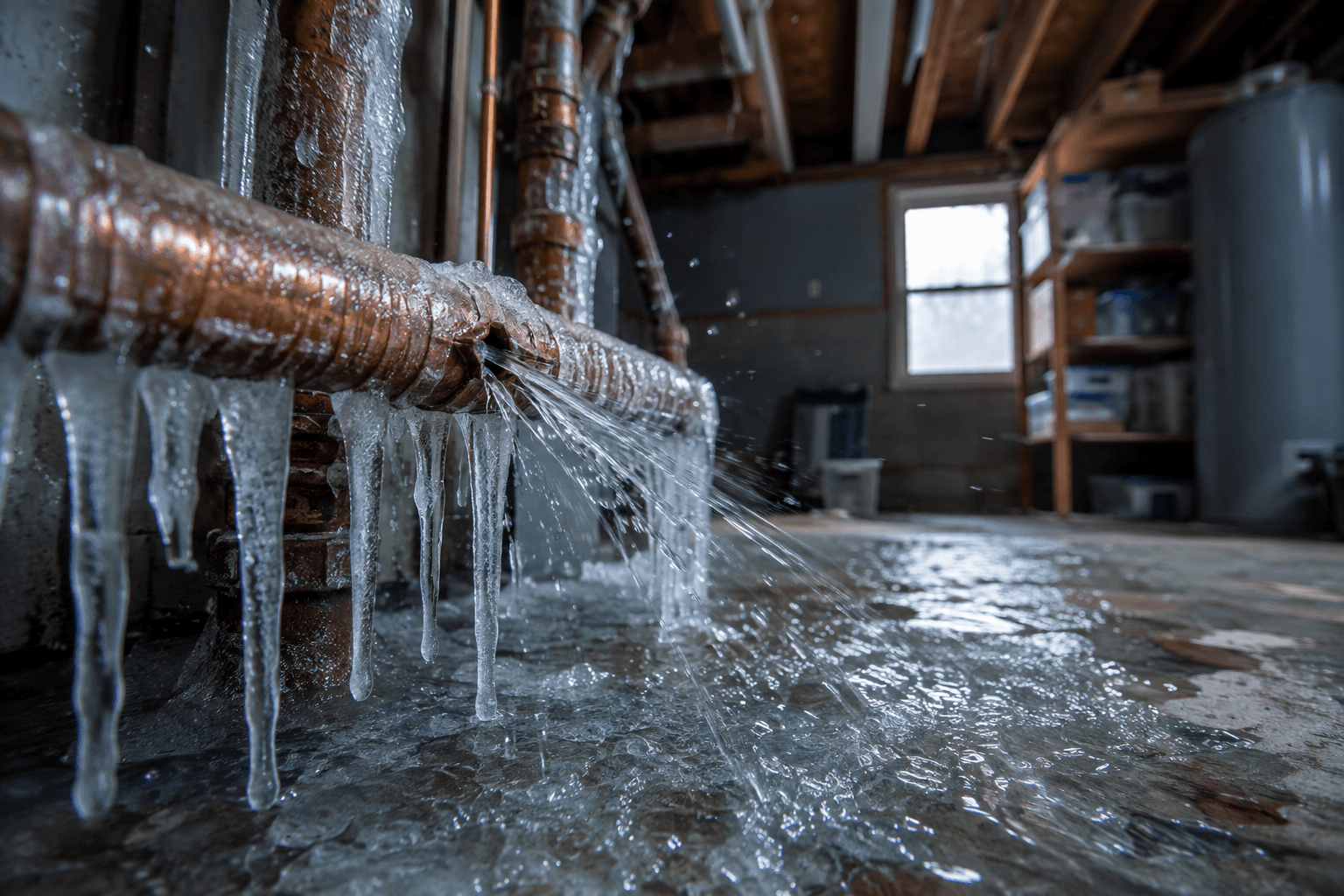
Frozen & Burst Pipes in Alaska: What to Do in the First Hour
A burst pipe can release many gallons in minutes, and mold starts within 24 to 48 hours. Here is exactly what to do, in order, before the crew arrives.

Insurance & Claims5 min
Fire to Finish: Why In-House Reconstruction Speeds Your Claim
Most fire claims stall in the handoff between the cleanup crew and the contractor. Here is why keeping mitigation and reconstruction under one roof moves the claim faster.
Cost Guide5 min
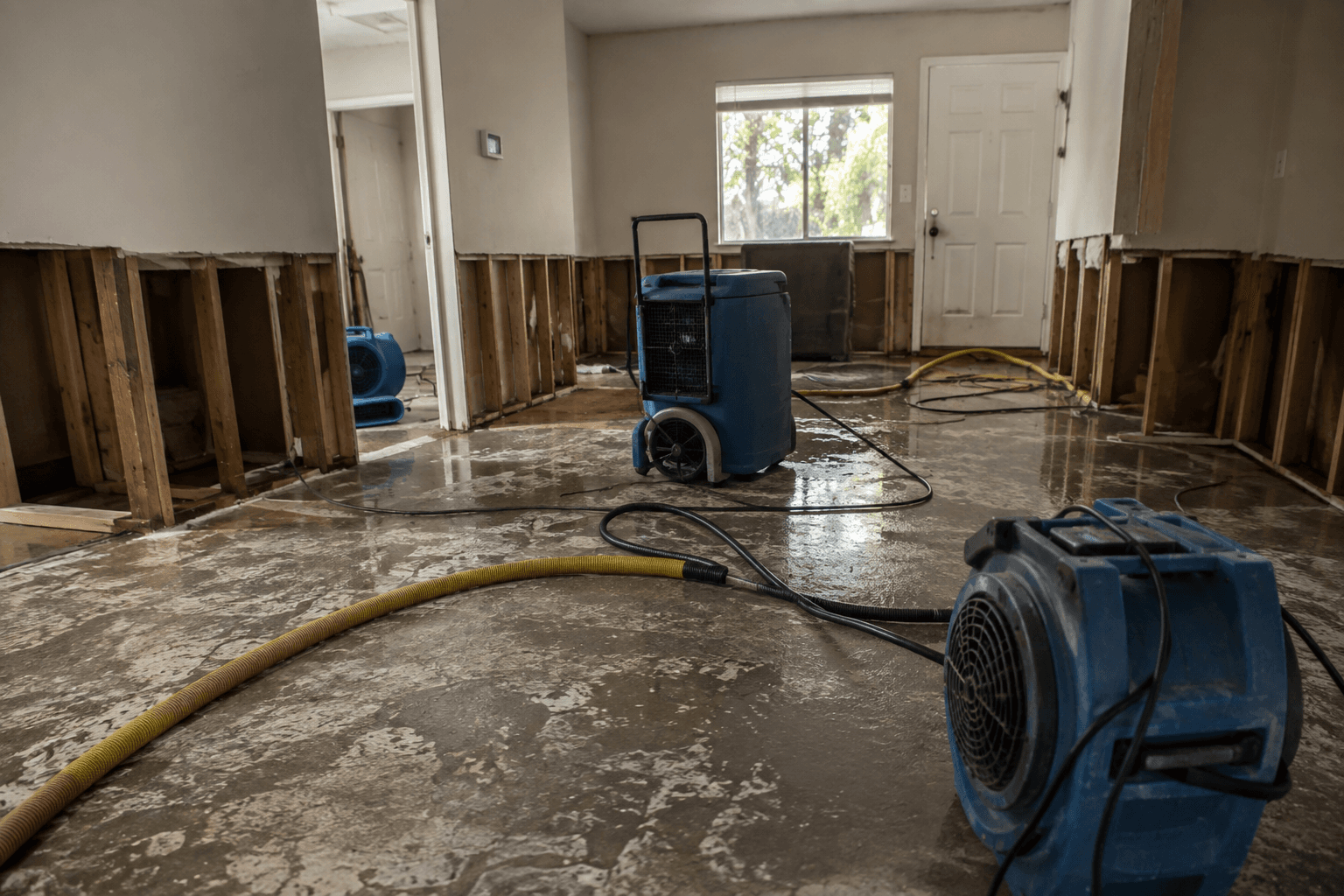
How Much Does Water Damage Restoration Cost in the Mat-Su Valley?
There is no single price, but there are four factors that set it. What drives the cost of a water loss in the valley, what insurance covers, and how acting fast keeps the number down.