
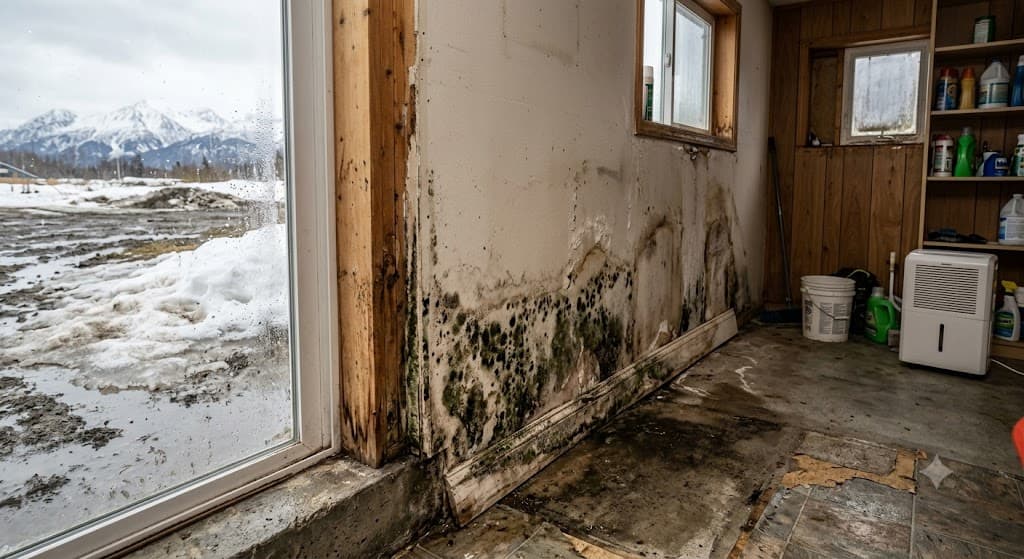
Spring in the Mat-Su Valley is a relief after a long winter, but all that snow has to go somewhere. As the pack melts, water works its way toward foundations, crawl spaces, and low spots. In a valley full of homes on crawl spaces, that spring melt is a quiet mold risk. A little attention now keeps a wet spring from becoming a summer mold problem.
Key Takeaways
Spring snowmelt drives water toward foundations and into crawl spaces.
Mold can start on damp materials within 24 to 48 hours.
Moving meltwater away and drying fast are the best defenses.
Why Snowmelt Leads to Mold
Winter drops a deep snowpack across the valley, and spring releases it all at once. The NWS Alaska-Pacific River Forecast Center tracks the breakup flooding this melt can bring. That water raises the local water table and pools around homes.
From there it finds the low, damp spaces a home offers. Crawl spaces and basements take on that moisture first. Damp materials in a dark, still space are exactly what mold needs to grow.
Where Spring Moisture Shows Up
The melt does not flood every home, but it targets a few weak points. Knowing where to look helps a Wasilla homeowner catch it early.
Crawl spaces are the most common trouble spot in the valley. Groundwater seeps up through a dirt floor and dampens the framing above. Basements and foundation walls are next, where meltwater pools against the concrete. Low spots in the yard that drain toward the house make all of it worse. Older Wasilla homes and those near lakes see this most in the thaw.
How to Prevent Mold After Snowmelt
Prevention is about keeping meltwater away and drying what gets in. A few steps each spring protect a Mat-Su home.
Move Meltwater Away From the Foundation
Clear snow away from the foundation before the big thaw. Make sure the ground slopes away from the house, not toward it. Point downspouts and drainage well away from the walls.
Check and Dry Your Crawl Space
Look in the crawl space early in the spring for standing water or damp framing. A good vapor barrier over the dirt floor blocks rising moisture. Pump out any water and dry the space before mold has a chance to start. Even a small amount of standing water feeds mold in a closed crawl space.
Keep Indoor Humidity Down
Mold needs moisture, so dry indoor air is a strong defense. The EPA recommends keeping indoor humidity below 60 percent. A dehumidifier in a damp basement or crawl space helps through the wet season.
Dry Any Wet Spot Fast
If water does get in, dry it right away rather than waiting. Damp materials can grow mold within a day or two. Fast drying is what keeps a wet spring from turning into remediation. A shop vacuum and a fan handle a small spill before it spreads.
Warning Signs of a Mold Problem
Mold often announces itself before you can see it. A musty, earthy smell is usually the first clue, and it is strongest near the crawl space. Look for dark spots on framing, walls, or the underside of floors.
Damp or discolored patches near the foundation are worth a closer look. So are allergy symptoms that ease when you leave the home. Catching these early keeps a small mold issue from spreading.
Frequently Asked Questions
What kills mold in a crawl space?
Professionals remove mold with containment, cleaning, and antimicrobial treatment. The lasting fix is drying the space and stopping the moisture. Killing the mold without fixing the water only invites it back.
Why is there water in my basement after the snow melts?
Snowmelt raises the water table and pools around the foundation. It seeps in through cracks, low spots, and a damp crawl space. Good grading and drainage are the fix.
Can you put a moisture absorber in a crawl space?
A moisture absorber can help in a small, contained space. It is not enough for a real water problem, though. A vapor barrier and drainage do the heavy lifting.
What should cover a crawl space dirt floor?
A sealed vapor barrier over the dirt floor is the standard. It blocks the groundwater that rises into the framing. That single step prevents much of the valley's crawl-space mold each spring.
Found Mold After the Thaw? Call Ember & Tide
Spring melt is predictable, and a little prevention goes a long way. Still, a wet crawl space can get ahead of the best plans. Ember & Tide Restoration handles mold across Wasilla and the Mat-Su Valley. Our mold remediation crew removes the mold and fixes the moisture behind it. If the thaw left mold in your home, reach us through our contact page.
More reading
More From the Crew
Water Damage5 min
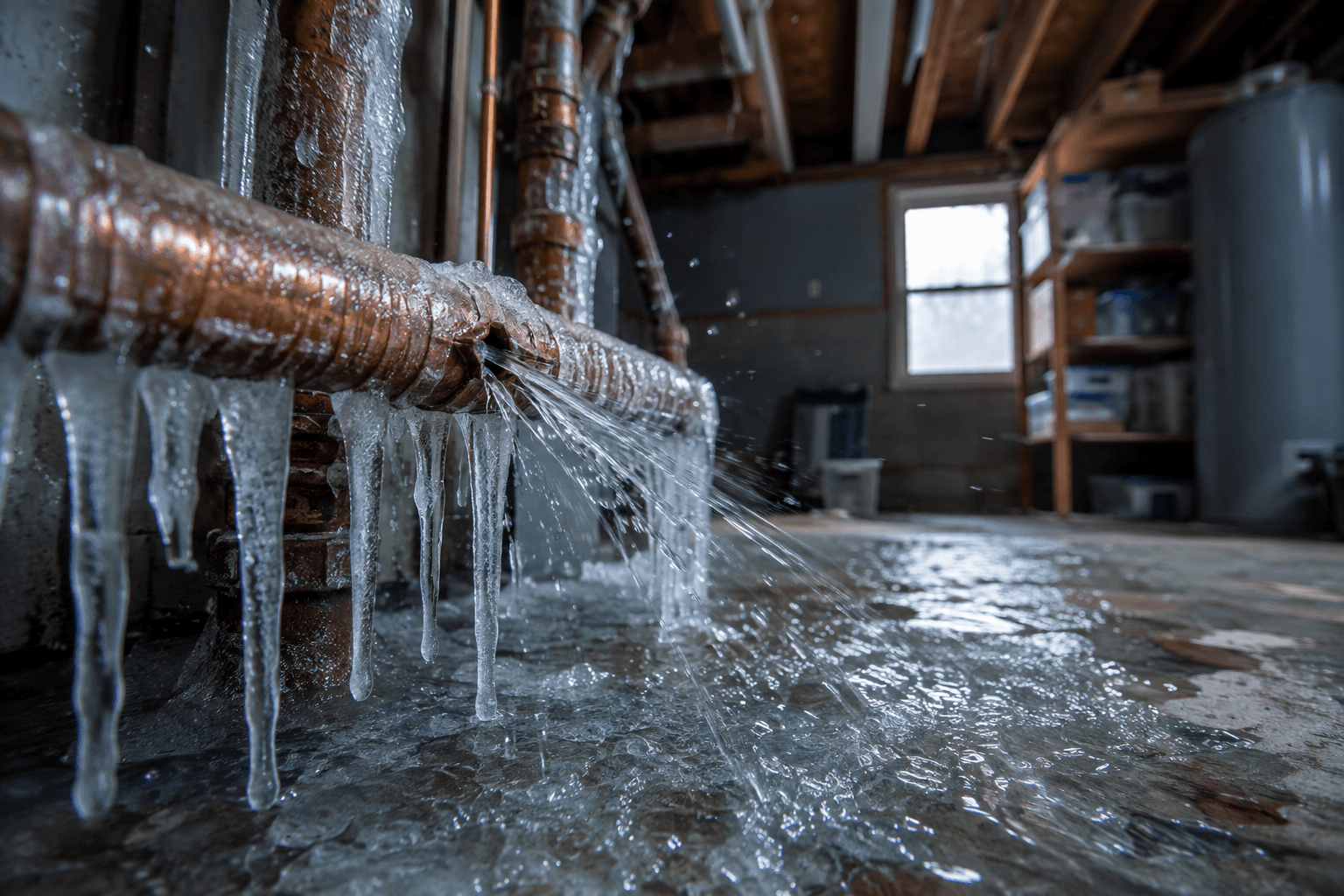
Frozen & Burst Pipes in Alaska: What to Do in the First Hour
A burst pipe can release many gallons in minutes, and mold starts within 24 to 48 hours. Here is exactly what to do, in order, before the crew arrives.

Insurance & Claims5 min
Fire to Finish: Why In-House Reconstruction Speeds Your Claim
Most fire claims stall in the handoff between the cleanup crew and the contractor. Here is why keeping mitigation and reconstruction under one roof moves the claim faster.
Cost Guide5 min
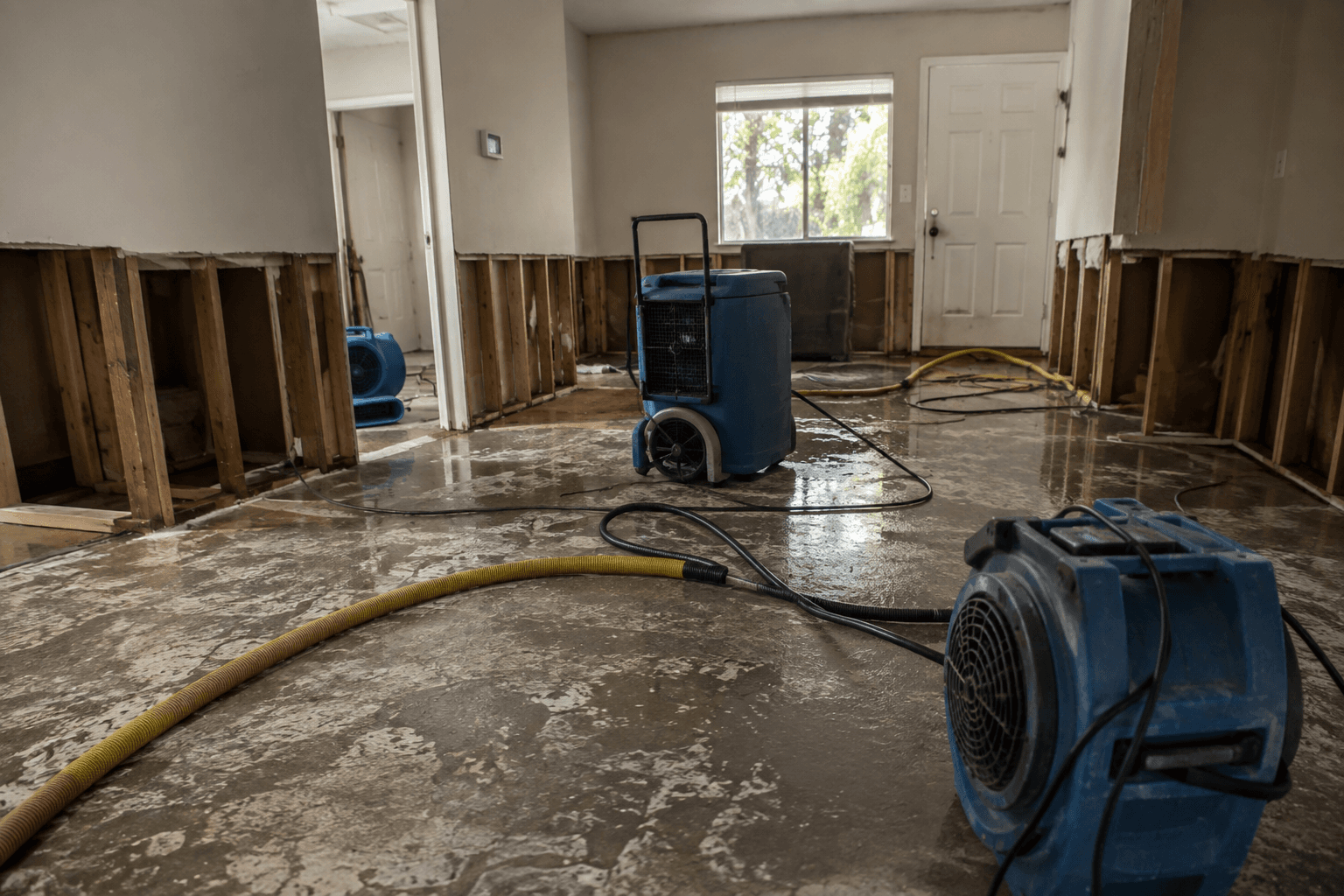
How Much Does Water Damage Restoration Cost in the Mat-Su Valley?
There is no single price, but there are four factors that set it. What drives the cost of a water loss in the valley, what insurance covers, and how acting fast keeps the number down.